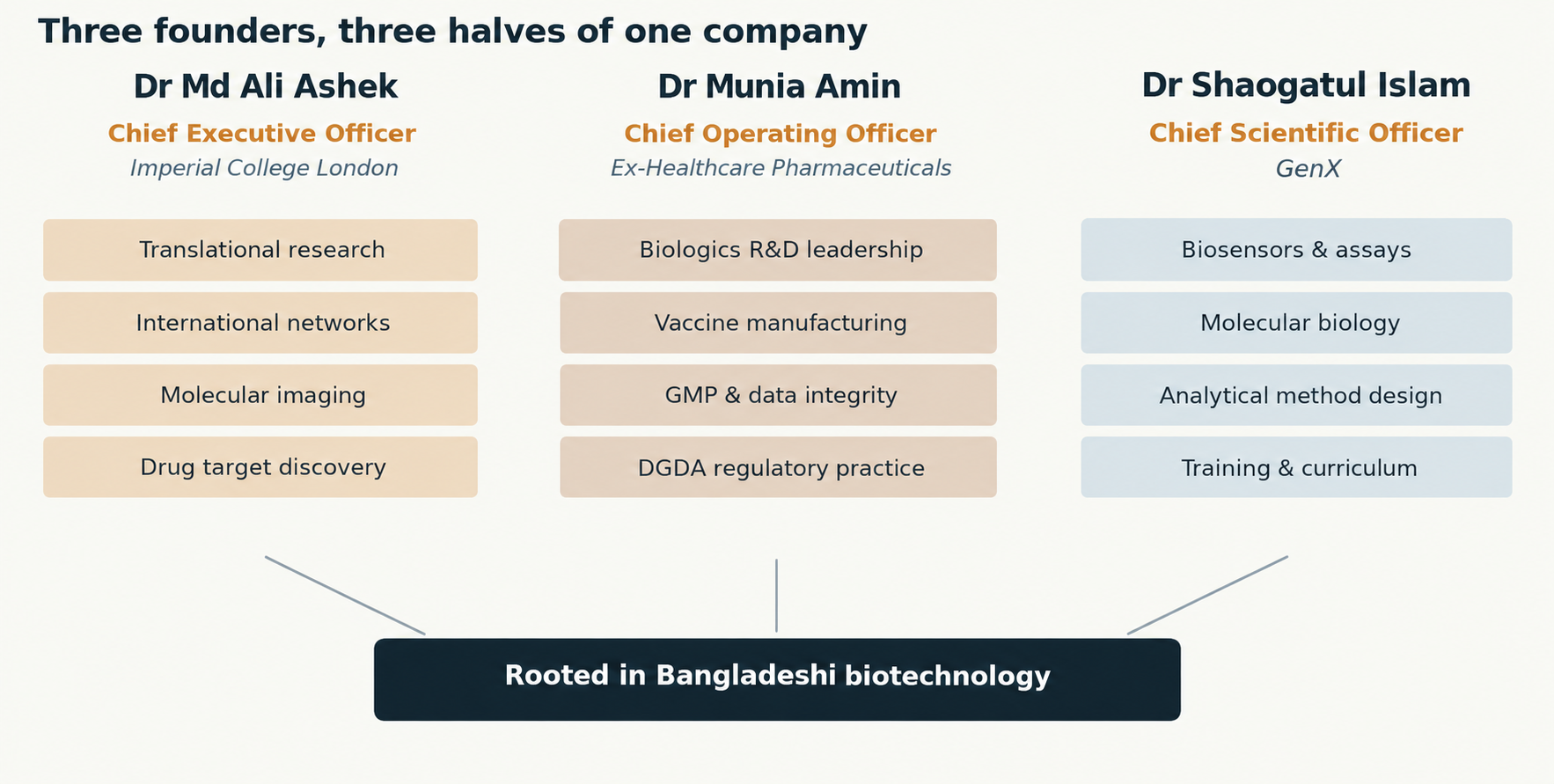
Figure 7 — Complementary expertise across the founding team.
Their careers cover the three things a biopharmaceutical services company needs: international research, hands-on industry experience, and analytical science.
We started this company because Bangladesh now manufactures biologics but still sends every sample abroad to be tested. We think the people who solve that should be Bangladeshi scientists.
Figure 7 — Complementary expertise across the founding team.
An industrial biologics leader who has built and run biosimilar and vaccine R&D inside one of Bangladesh's largest pharmaceutical companies.
Led process development for the biosimilar molecules that define the market — rituximab, bevacizumab, adalimumab, tocilizumab, interferon, filgrastim, erythropoietin — alongside tetanus and hepatitis B vaccines. She currently serves as Chief Operating Officer at GenX Health, leading scientific and laboratory operations for a clinical diagnostics business.
PhD in Biological Science, University of Exeter (2014), in molecular systems biology. MRes, University of Edinburgh (2008). BSc in Genetic Engineering & Biotechnology, University of Dhaka (2006), First Class Honours with Distinction.
Training in GMP, US Pharmacopeia through DGDA, data integrity, and pharmaceutical quality management. Hands-on regulated-manufacturing experience.
A translational research scientist who has worked in cardiopulmonary research at Imperial since 2011.
PhD, University of Edinburgh (2010), on renal function and angiotensin II-dependent hypertension. MSc, Korea Institute of Science and Technology (2006). BSc in Biotechnology, Khulna University (2001).
Works on novel drug targets and biomarkers for therapeutic response in preclinical models. His imaging programmes have been funded by the British Heart Foundation, in collaboration with Bayer and Pfizer. He also serves as PET Biologist at Imperial's Biological Imaging Centre.
Published in Circulation, Circulation Research, Circulation: Cardiovascular Imaging, Journal of Biological Chemistry, and Chemosphere — spanning molecular imaging, cardiovascular pharmacology, and computational drug design.
Between them, the founders have run biologics R&D inside a major Bangladeshi manufacturer, led research at Imperial College London, and built the analytical and training capability of a university discipline.
When a chromatogram shows an unexpected peak, or a comparability result sits at the edge of an acceptance range, the question is not whether the instrument was calibrated. It is what the result means for your product, and how you explain it to a regulator. That is the expertise Biomederium is built on.